
Donate

About

Bring the music home.

People give to people, not to organizations. This page is about the person who started this, the city it serves, and the standards we hold ourselves to.

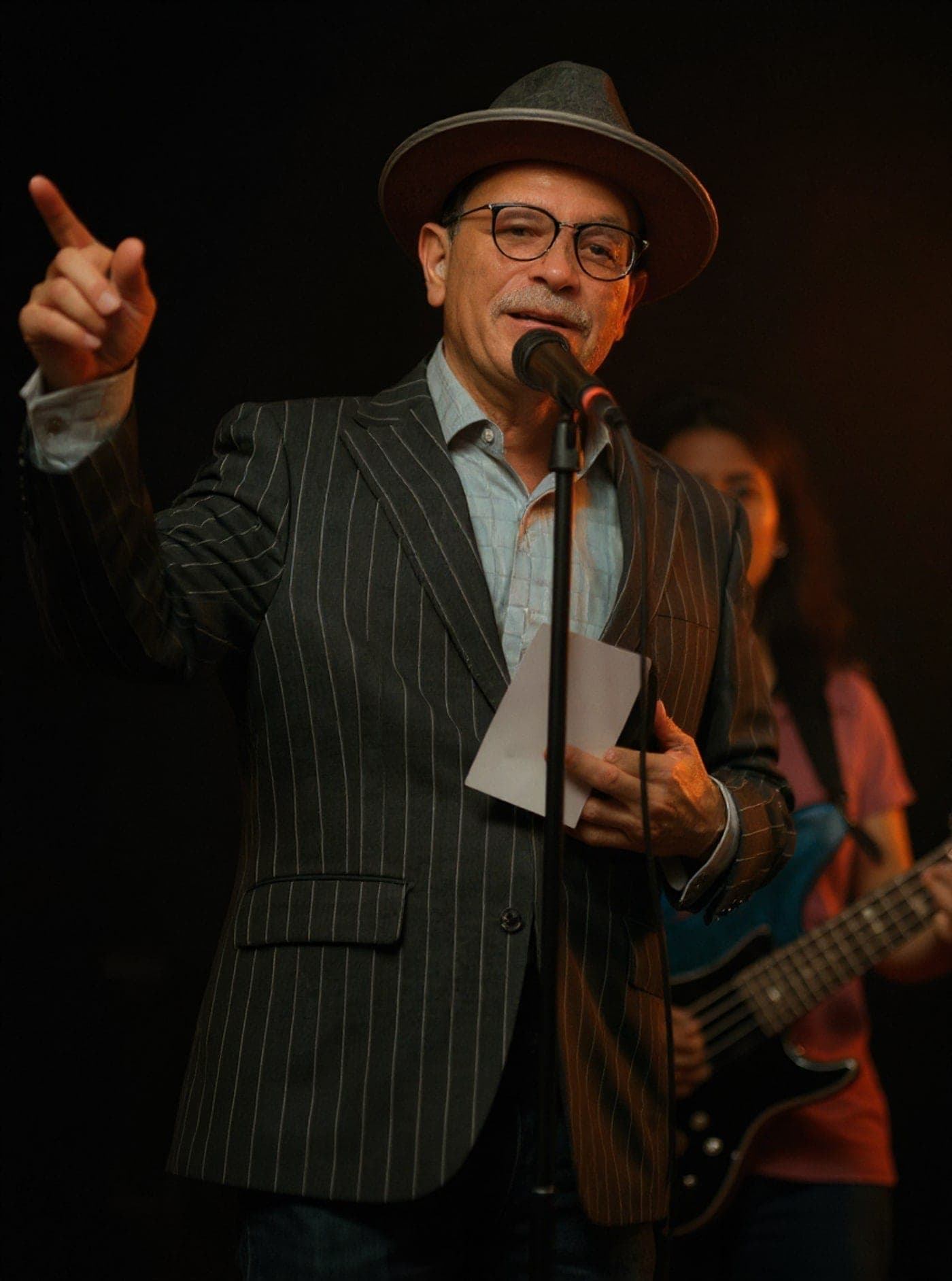
Daryl Sweeney on stage at a First Fridays concert, hat on, gesturing to the room from behind the microphone.
Daryl SweeneyFounder, Carson Arts FoundationFormer Mayor of Carson

Our story

He already ran this city. Now he is booking its bands.

Daryl Sweeney was elected to the Carson City Council in 1997 and, in 2001, beat three former mayors to become the youngest mayor in the city's history. As mayor he worked with CSU Dominguez Hills and AEG to bring the stadium now known as Dignity Health Sports Park onto the CSUDH campus, which is to say: he has done the unglamorous work of getting something permanent built in Carson before.

Before politics he spent his career in banking, rising to Vice President at Home Savings of America as one of the youngest in the country, running a lending office that funded over $100 million in a single year, and helping build an affordable housing division that financed subsidized housing across three states. He later served as Chief of Staff to a Los Angeles City Councilmember, and sits on the board of the Mervyn Dymally African American Political & Economic Institute at CSUDH.

For the last seven years he has been producing and promoting live jazz, including First Fridays, a monthly series he hosts that fills a room with several hundred people who came to listen.

None of it happened in Carson.

That is the whole reason this foundation exists. Daryl could fill a room, pay a band, and draw a crowd, but he had to leave his own city to do it, and so did everyone who came. The Carson Arts Foundation is the correction: the same professionally produced live jazz, brought home and paired with free instruction for the kids who live here.

He founded the Carson Arts Foundation in 2026. He lives in Carson with his wife of forty-three years, his high school sweetheart.

Track record

  • Mayor of Carson, 2001. City Council, 1997.
  • Seven years producing and promoting live jazz.
  • Vice President, Home Savings of America. $100M+ funded in one year.
  • Chief of Staff, Los Angeles City Council.
  • Board, Mervyn Dymally African American Political & Economic Institute, CSUDH.
  • Gubernatorial appointee, California Housing Partnership Corporation.
Why Carson

The community that produces the talent should get to enjoy the art.

This is a city of working families, immigrants, artists, athletes, church musicians, and entrepreneurs, a place with genuine creative energy and no dedicated venue to channel it into.

Meanwhile, jazz, the one art form America can claim as entirely its own, is increasingly treated as a specialty product for wealthy audiences in expensive rooms.

The Carson Arts Foundation exists at that intersection. We believe a teenager in Carson with a horn and something to say deserves a mentor and a microphone. And we believe the creativity already alive in this city is worth investing in, not importing around.

Mission

Preserving the rich legacy of jazz while inspiring its future.

The Carson Arts Foundation is dedicated to preserving the rich legacy of jazz while inspiring its future through exceptional live performances, arts education, and meaningful community engagement. We celebrate jazz as a vital cultural treasure by creating opportunities for audiences of all ages to experience, appreciate, and support this uniquely American art form. Through concerts, educational initiatives, visual art, and community partnerships, we enrich lives, foster creativity, and ensure that the spirit of jazz continues to thrive for generations to come.

Vision

A premier cultural destination where jazz and the visual arts thrive.

To become a premier cultural destination where jazz and the visual arts thrive, inspiring lifelong appreciation, empowering the next generation of artists, and strengthening communities through creativity, education, and artistic expression.

Through world-class performances, dynamic visual arts exhibitions, and transformative educational opportunities, we aspire to be a leading force in preserving artistic excellence, nurturing emerging talent, and making the arts accessible to everyone.

Preserve the Legacy · Inspire the Future · Promote Jazz · Preserve the Legacy · Inspire the Future · Promote Jazz

Our values

Six standards we hold ourselves to

These are operating rules, not sentiments. Each one costs us something, which is how you know we mean it.

  • Access Before Prestige

    If a program's success depends on a ticket price that shuts out our neighbors, it isn't a success. Free and reduced admission is designed in from the start, never added as charity.

  • Pay the Artists

    Working musicians are professionals. We budget for artist fees before we budget for anything else. “Exposure” is not compensation.

  • Local First

    Carson and South Bay talent shares the bill with touring artists, as peers, not filler. Our stages are a platform for the community, not just for visitors.

  • Teach and Perform Together

    Education and performance are one program, not two. The artist on Saturday's stage teaches Monday's masterclass. Students open the shows.

  • Honor the Elders

    The people who carried this music are still here. We record them, exhibit them, credit them, and seat them in the front row.

  • Stewardship and Transparency

    Donors and the public can see where the money goes. We publish our programming and financial summaries annually.

Board & leadership

Who is accountable

The Carson Arts Foundation is actively expanding its board and advisory council. If you're interested in serving, we'd like to hear from you.

Founder

Daryl Sweeney

Former Mayor of Carson and a thirty-year veteran of banking, public office, and community development. Seven years producing live jazz. Full bio

Support the music

A student is waiting on an instrument that has not been bought yet.

That is not a metaphor. It is the actual state of the lending library. Donations pay working musicians, hold free seats for students and seniors, put instruments in young players' hands, and record the elders while there is still time. In that order.